
Thank you for visiting. Due to high demand, I am not currently taking on new clients. I look forward to welcoming new clients in early 2024.
MEET
TAYLOR
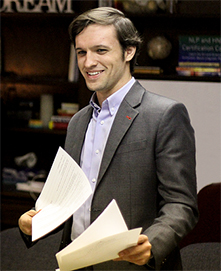
I’m a Certified Hypnotist (CH) and Certified Instructor of Hypnosis (CI) through the National Guild of Hypnotists, the oldest and largest hypnosis organization in the world. I’ve been a professional hypnotist for over 13 years.
Having grown up in Central Virginia, my educational background includes a Bachelors of Business Administration from Radford University. My professional affiliations from which I have achieved certified status include the National Guild of Hypnotists, the International Association of Counselors and Therapists, the Hypnosis Motivational Institute, the Society of Experiential Trance, and the Atlantic Board of Hypnosis.
My Passion
My journey in hypnosis has been an interesting one. I initially became curious about hypnosis through a friend who had already taken a hypnosis course. After learning the basics, we set out to hypnotize everyone we knew. We found volunteers who wanted to stop smoking, lose weight, or release stress from their life, and I quickly learned what worked and what didn’t.
These days my main interest has continued to be working with clients in individual sessions and facilitating teams. Although I would never have imagined when I first began that I would be doing this type of work, it is truly fulfilling to help a person to grow in ways they didn’t know they could, and to access parts of themselves that they didn’t know they had.
Video Interview
My Philosophies
Client-centered: I believe that change begins within the person, that each person has untapped wisdom, and that we can take specific, actionable steps to achieve our goals.
Pragmatic: I believe in doing what works, and sorting for what makes the most difference in people’s lives.
Welcoming: I believe that diversity is important and welcome working with people of all age groups, races, ethnicities, cultures, genders, sexual orientations, and levels of ability.
Open-minded, Evidence-based: I believe we should consider all options but take into strong consideration what available evidence and scientific inquiry has presented as being true. I believe in hypnosis services being “complementary” of rather than an “alternative” to traditional treatments.
Artful: I believe that making shifts in one’s life should occur in a meaningful and enjoyable way. Hypnosis is more than just sitting in a chair for an hour with your eyes closed! It is a dynamic and creative process where you are able to access resources far beyond your conscious awareness.
My Accomplishments
In case you’re curious, some of my accomplishments in the world of hypnosis are as follows:
Appearances: I have been an invited presenter to the National Institutes of Health speaking on Stress Reduction and Pain Management1. I am on the faculty at the National Guild of Hypnotists as a Speaker at the annual conference2. I have written many blog posts and articles for the Tranced Out Hypnosis Blog, as well as having been featured on the Whats On My Brain Hypnosis Training Blog. I’ve also been featured on Blog Talk Radio, on 105.9 The Edge Radio, and have been interviewed by the Keys to the Mind group.
Trainings: I train other hypnotists in the many uses of hypnosis. I am a Certified Instructor of Hypnosis (CI) for the National Guild of Hypnotists (the oldest, largest, and most recognized hypnotism organization in the world), certified by the psychologist Dr. Richard Harte.
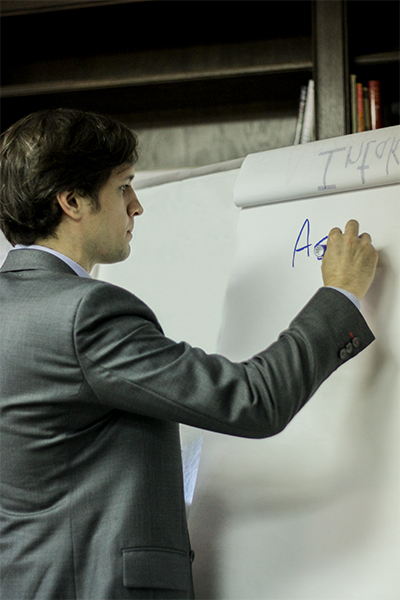
Taylor Sherman presenting professional hypnosis training
Consulting: I am a Certified Executive Coach and Certified Organizational Development Consultant. In this capacity, I work with companies and organizations to develop clarity of purpose and assist with the most important organizational success factor: State of Mind.
Neuro-Linguistics: I am a Certified Master Practitioner and Trainer of Neuro-Linguistic Programming and Humanistic Neuro-Linguistic Psychology and have certified a number of area practitioners in these skills.
Mentoring: I offer mentoring services to youths interested in hypnosis through my community, and have served as a Community Mentor for the International Association of Youth Hypnotists. Supervision is offered to graduates of my certification programs.
Sports Hypnosis: I work with talented athletes and competitors to achieve peak performance in their sports. I am a certified Golf Specialist. Among the sports I have worked with include: Golf, Tennis, Baseball, Soccer, Gymnastics, Competitive Weightlifting, Clay Target Shooting, Track and Field, Cross Country, and Basketball.
Education and Certifications
- Bachelor's in Business Administration
- Certified Hypnosis Instructor
- Certified in Brain-Based Teaching and Training
- Certified Executive Coach
- Certified in Core Transformation
- Certified Hypnotist
- Certified Master Practitioner of NLP
- Certified Trainer of Humanistic Neuro-Linguistic Psychology
- Certified Organizational Development Consultant
- Certified in Advanced Regression Hypnotherapy
1 National Institutes of Health, National Institute of Environmental and Health Sciences, Environmental Autoimmunity Group. February 4th and March 10th, 2016. Third talk given on Complementary and Alternative Medicine, June 26th, 2019. Topics included Stress Reduction, Uses of Hypnosis, Self-Hypnosis, Autogenic Meditation, and Pain Management.
2 National Guild of Hypnotists’ Annual Convention in Marlborough, MA. Invited speaker on a variety of topics, both 1-hour seminars and 2-hour workshops. Average participant evaluation rating of 4.9 on a scale of 5.